The best SEO WordPress theme is a fast, lightweight one that gets out of your way, and for most sites that is Sydney. A good theme will not rank your site on its own, but a bad one will actively hold it back, and that is the part most theme roundups skip.
Here is what actually matters. Google measures how quickly your pages load and become usable. Your theme decides how much CSS and JavaScript ships on every page, how clean your HTML is, and whether your headings make structural sense. Get that foundation right and your content has a fair chance. Get it wrong and no amount of on-page optimization will rescue you.
Every theme on this list is free on WordPress.org, and we pulled the version, install count and rating for each one directly from the WordPress.org API on 16 August 2026 so you are looking at real numbers rather than marketing copy.
Table of Contents
SEO WordPress themes compared
| Theme | Best for | Active installs | Rating | Last updated |
|---|---|---|---|---|
| Sydney | Most sites, especially content-led ones | 80,000+ | 4.9 (794) | 20 Jul 2026 |
| Astra | Starter-template speed with a huge ecosystem | 1,000,000+ | 4.9 (6,506) | 11 Aug 2026 |
| GeneratePress | Developers who want minimal markup | 500,000+ | 5.0 (1,426) | 1 Dec 2025 |
| Kadence | Built-in schema markup | 500,000+ | 4.9 (452) | 24 Jul 2026 |
| Neve | Mobile-first performance | 200,000+ | 4.7 (1,278) | 12 Aug 2026 |
| Hello Elementor | Elementor users who want a blank base | 1,000,000+ | 4.2 (128) | 20 May 2026 |
| Botiga | WooCommerce stores | 10,000+ | 4.9 (163) | 22 Jul 2026 |
| Blocksy | Block editing with performance controls | 300,000+ | 5.0 (871) | 13 Aug 2026 |
| Twenty Twenty-Five | A free, fast baseline with zero decisions | 1,000,000+ | 3.9 (13) | 20 May 2026 |
What makes a WordPress theme SEO friendly
Theme marketing pages all say “SEO optimized.” It means very little on its own. These are the four things that actually move the needle.
Page weight and Core Web Vitals
This is the big one. Every kilobyte of CSS and JavaScript your theme loads has to be downloaded, parsed and executed before your page becomes usable. Google measures that experience through Core Web Vitals, and Largest Contentful Paint in particular tracks how long your main content takes to appear.
Heavy multipurpose themes are the usual culprit. They ship code for every feature they have ever offered, whether your site uses it or not. A lightweight theme loads what your page needs and nothing else. If you want to see the difference measured rather than asserted, we tested a batch of them in our roundup of the fastest WordPress themes.
Clean markup and heading structure
Search engines read your HTML to work out what your page is about and how it is organized. A theme that outputs semantic HTML, uses one H1 per page, and nests headings in a logical order makes that job straightforward.
Themes that wrap everything in a dozen nested divs, or that style headings by level rather than by meaning, force Google to guess, and guessing rarely works out in your favor.
Schema markup support
Structured data tells search engines what type of content a page holds, which is what makes rich results possible. Some themes output schema natively for articles, breadcrumbs and reviews. Kadence is the clearest example on this list. Others leave it entirely to your SEO plugin, which is fine as long as you know that is the arrangement.
Does your theme replace an SEO plugin?
No, and this is worth being blunt about because most theme roundups quietly imply otherwise.
Your theme controls speed, markup and structure, but it does not write your meta titles and descriptions, generate your XML sitemap, manage canonical URLs, handle redirects, or produce most of your structured data. All of those are plugin jobs. A fast theme with no SEO plugin is a fast site that Google struggles to index properly.
Pair whichever theme you choose with a dedicated SEO plugin. If you are weighing up the options, we compared the main ones in our guide to Yoast alternatives, and there are a few more worth knowing about in our list of the best WordPress plugins.
1. Sydney
Sydney is our own theme, and it leads this list because it sits squarely in the category the whole SEO-theme conversation rewards. It is fast, lightweight, and flexible enough that you are not fighting it.
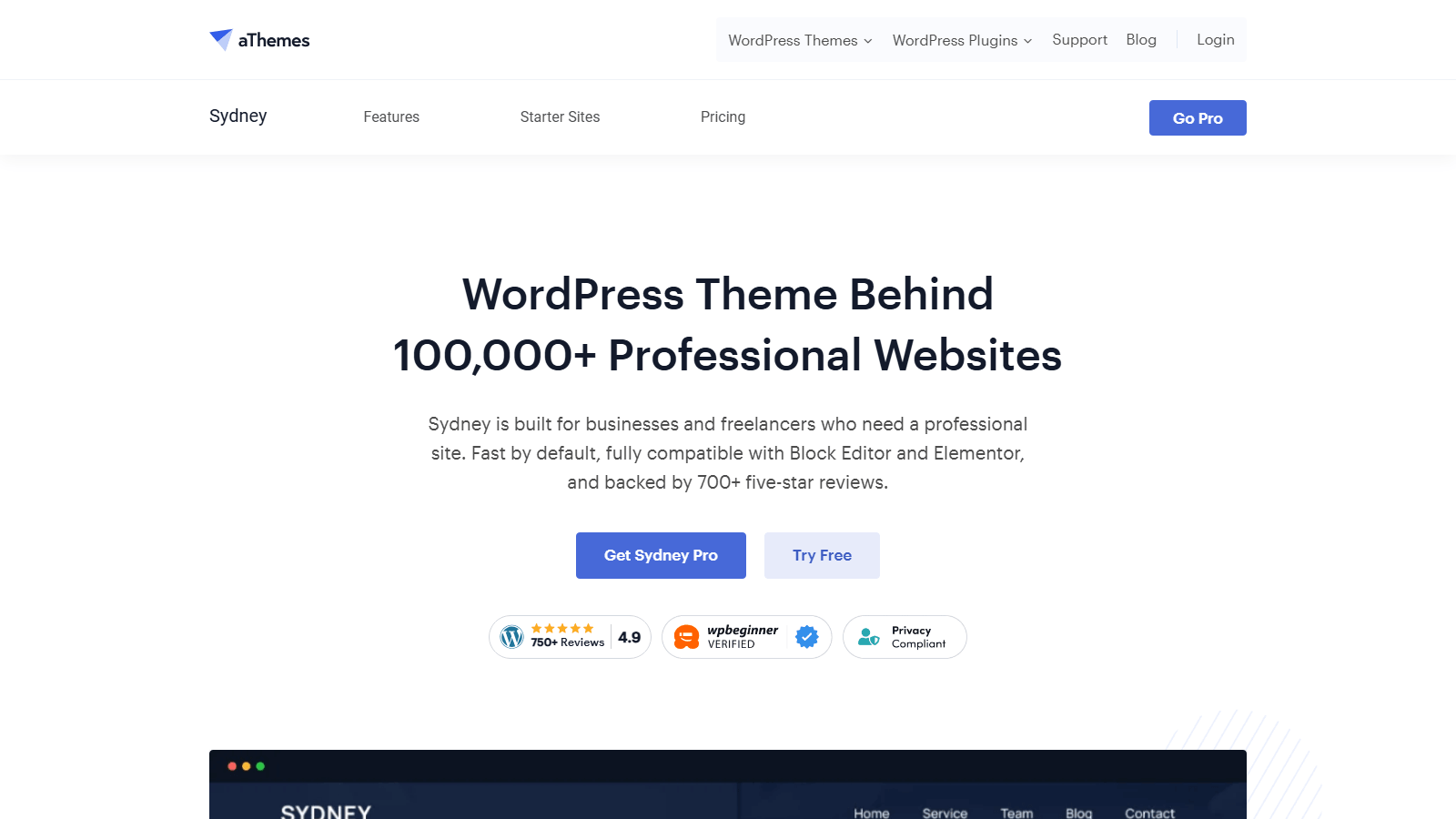
It is built for speed first, so you get a set of starter sites you can import in a click, it works with both the block editor and Elementor, and it supports WooCommerce if you add a shop later. That combination matters for SEO in a practical way, because you can build the site you actually want without reaching for a heavy page builder or a pile of plugins to fill gaps, and every one of those additions would have cost you page weight.
Key things to know
- Free on WordPress.org, currently version 2.70
- 80,000+ active installs, rated 4.9 from 794 reviews
- Starter sites for a one-click starting point
- Works with the block editor and with Elementor
- WooCommerce support built in
The honest limitation is that Sydney is a general-purpose theme. If you need a design that is highly specific to one industry out of the box, a niche theme may get you there with less work, though usually at the cost of the speed you came here for.
My verdict: Sydney is the best all-round SEO WordPress theme for most sites. It is fast, it is free, and it does not lock you into a page builder to get a decent-looking result.
2. Astra
Astra is the most-installed theme on this list by a distance, and that scale is part of the argument for it. Over a million sites run it, which means compatibility problems have mostly been found and fixed by someone else already.
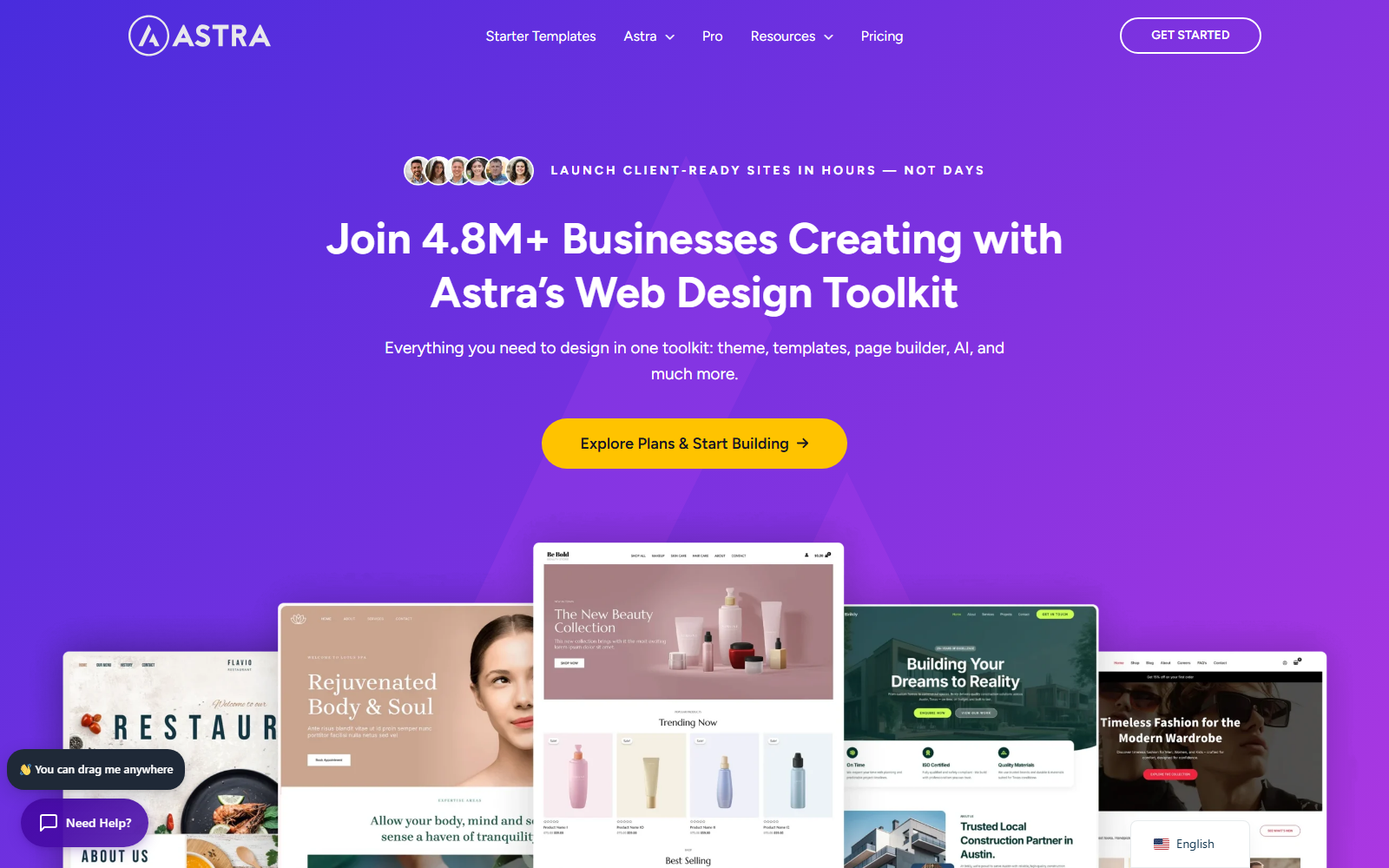
It is genuinely lightweight in its default state, and its starter template library is the largest of any theme here. If you want to go from a fresh WordPress install to a finished-looking site in an afternoon, Astra is hard to beat.
Key things to know
- Free on WordPress.org, currently version 4.13.9
- 1,000,000+ active installs, rated 4.9 from 6,506 reviews
- The largest starter template library of any theme on this list
- Actively maintained, last updated 11 August 2026
The trade-off is that Astra's flexibility comes through a large settings surface and a premium add-on ecosystem. The base theme is fast. What you bolt onto it is where weight creeps back in.
My verdict: Astra is the strongest pick if you want the biggest template library and the safest compatibility bet. Keep an eye on what you add to it.
3. GeneratePress
GeneratePress is the theme developers and technical SEOs reach for. Its whole design philosophy is to output as little as possible and let you add only what you need.
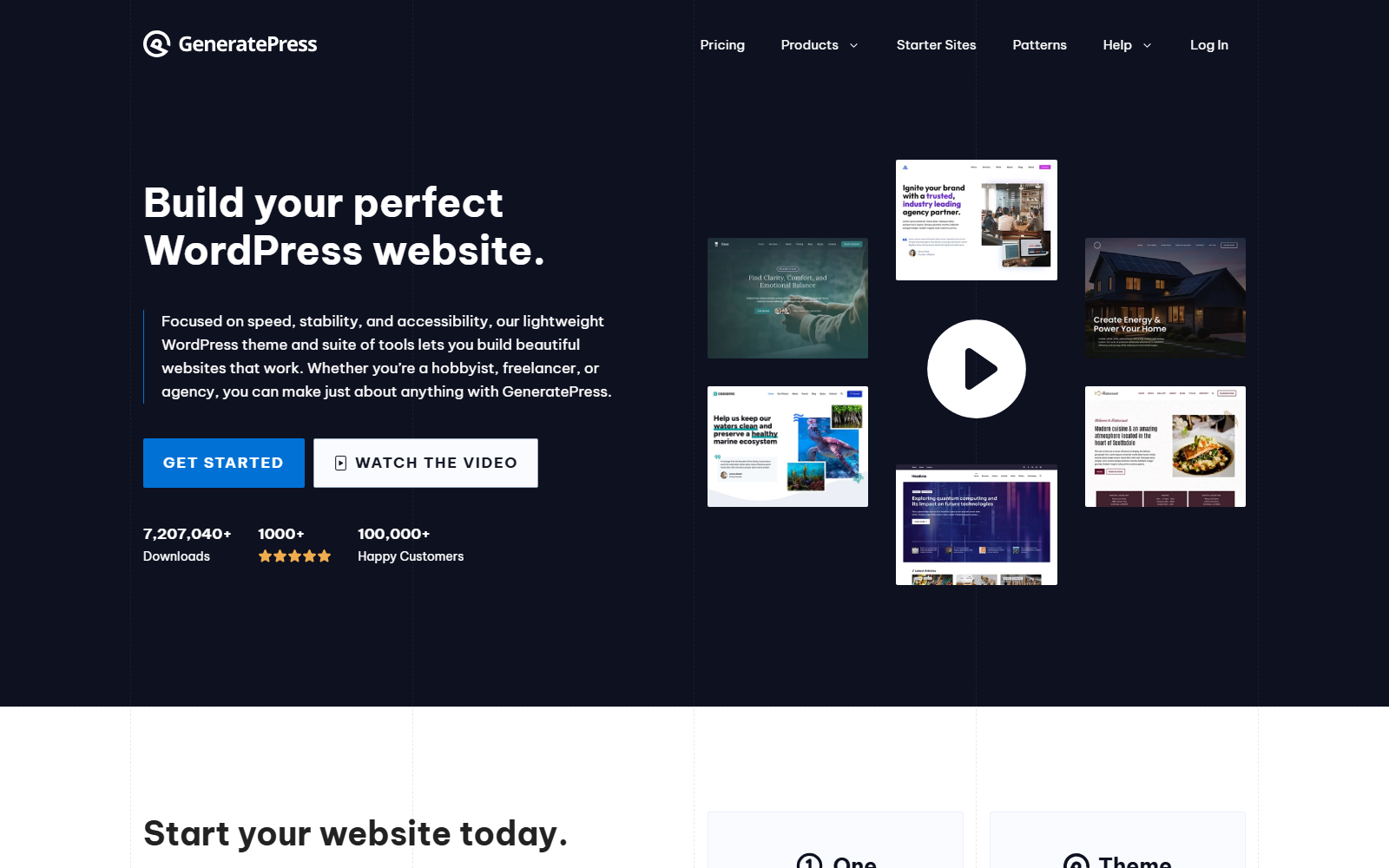
The markup it produces is about as clean as WordPress themes get, and it has the highest rating on this list at a perfect 5.0 across 1,426 reviews. If you care about what your HTML actually looks like when it reaches the browser, this is the theme that will please you most.
Key things to know
- Free on WordPress.org, currently version 3.6.1
- 500,000+ active installs, rated 5.0 from 1,426 reviews
- Minimal default output, modular feature loading
- Worth noting: last updated 1 December 2025, the longest gap of any theme here
That update gap is not a red flag on its own. GeneratePress is a mature, stable theme with a long track record, and stable themes need fewer releases. But it is a fact worth knowing, and no other roundup will tell you.
My verdict: GeneratePress is the pick if clean markup and minimal output matter more to you than starter designs. Its release cadence has slowed, so check the changelog before you commit a large project to it.
4. Kadence
Kadence is the schema theme of this list, and where most themes leave structured data entirely to your SEO plugin, it outputs a meaningful amount natively, which is a real differentiator if rich results are part of your strategy.
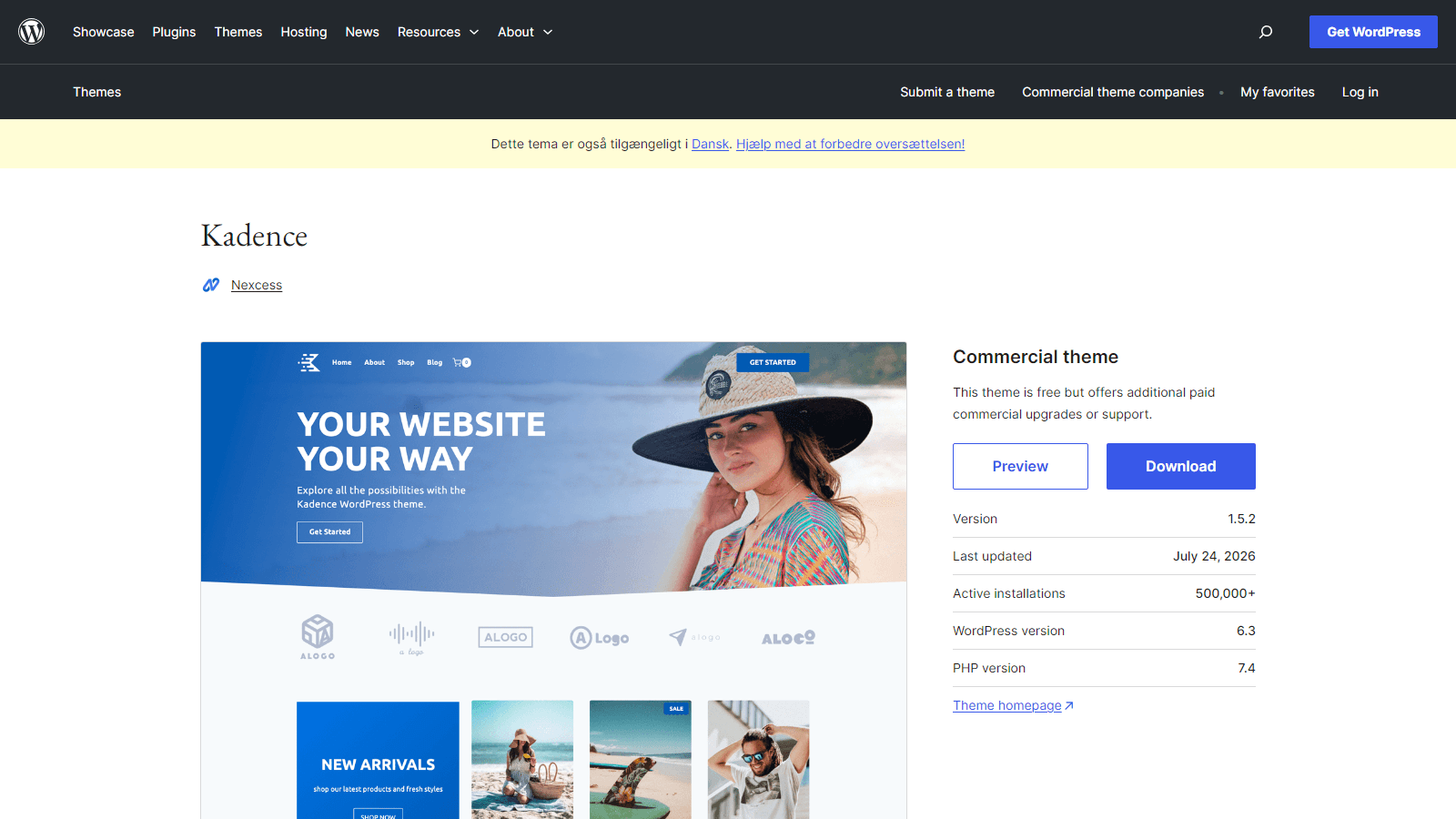
It also has the deepest block editor integration on this list. If you are building with Gutenberg rather than a page builder, Kadence gives you design control without dragging a separate builder's JavaScript onto every page.
Key things to know
- Free on WordPress.org, currently version 1.5.2
- 500,000+ active installs, rated 4.9 from 452 reviews
- Built-in schema markup output
- Deep block editor integration
The trade-off is that Kadence's feature set is broader than GeneratePress's, and breadth has a cost. It is still light, but it is not the lightest thing here.
My verdict: Kadence is the best choice if you want native schema markup and you are committed to the block editor. Choose GeneratePress instead if raw minimalism is the priority.
5. Neve
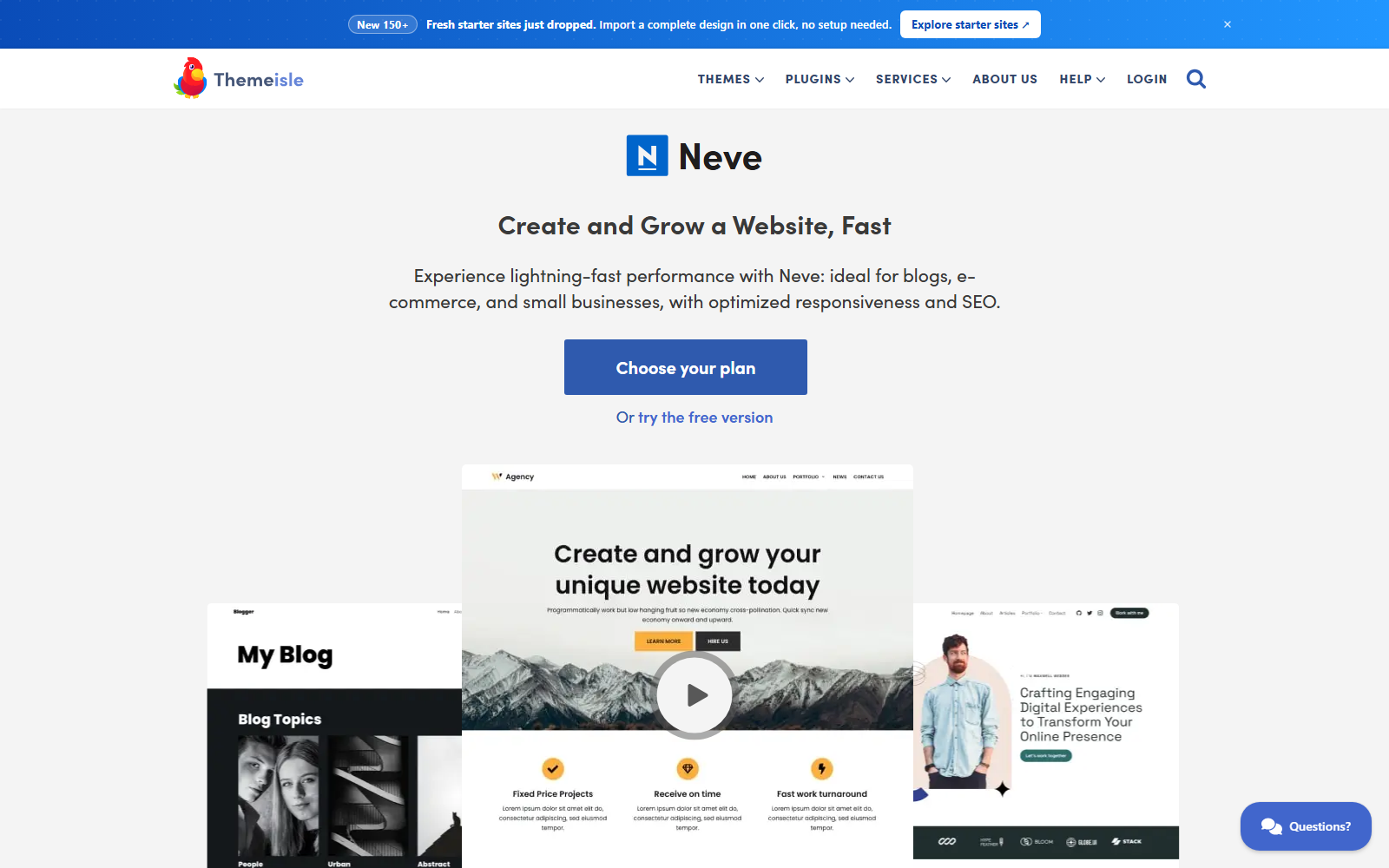
Neve is built mobile-first, which is the right instinct given that Google indexes the mobile version of your site. Its default configuration is deliberately light, and it is one of the most actively maintained themes on this list.
Key things to know
- Free on WordPress.org, currently version 4.2.11
- 200,000+ active installs, rated 4.7 from 1,278 reviews
- Mobile-first default configuration
- Updated 12 August 2026, among the most recent here
Its 4.7 rating is the second-lowest of the premium-grade options on this list. Not bad by any measure, but a step below the 4.9s and 5.0s above it.
My verdict: Neve is a solid pick if mobile performance is your main concern. The themes above it have stronger ratings, so choose Neve for the mobile-first approach specifically rather than as a default.
6. Hello Elementor
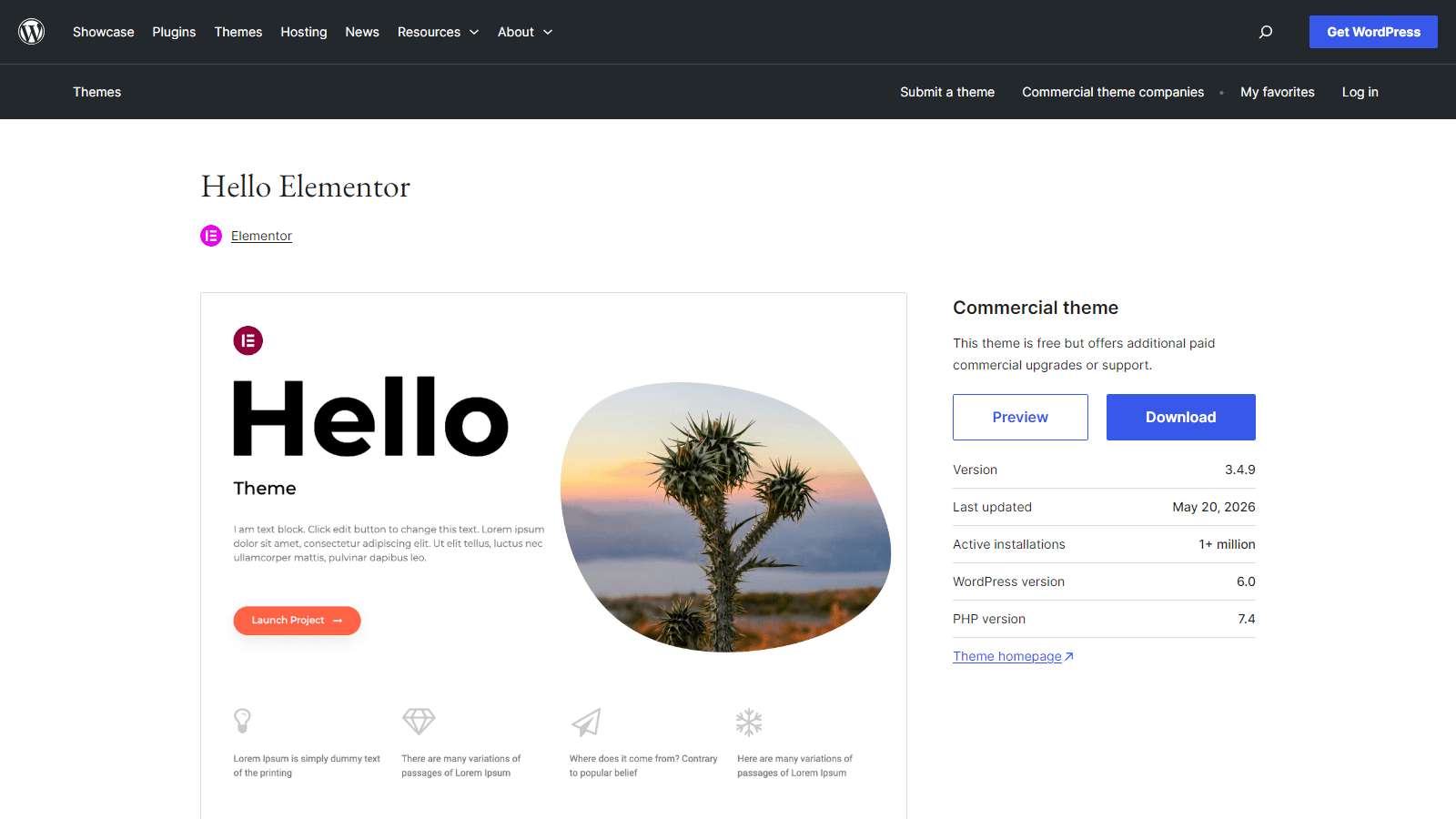
Hello Elementor is a deliberately blank theme that ships almost no styling at all, which makes it extremely light on its own and suits its purpose as a neutral base underneath Elementor.
Key things to know
- Free on WordPress.org, currently version 3.4.9
- 1,000,000+ active installs, rated 4.2 from 128 reviews
- Close to zero default styling
- Designed as a base for Elementor
Here is the part that gets left out of most lists. Hello Elementor is only fast in isolation, because the moment you build with Elementor on top of it, Elementor's own CSS and JavaScript is what determines your page weight, and that is a much heavier payload than the theme you started with. Choosing Hello Elementor does not make an Elementor site fast. If you want to understand that trade-off properly, our comparison of the best page builder plugins goes into it.
My verdict: Hello Elementor makes sense only if you are already committed to Elementor. As a standalone theme it gives you nothing to work with, and it will not save you from Elementor's page weight.
7. Botiga
Botiga is our WooCommerce theme, and it earns a place here for one specific reason. Product and shop pages are where store SEO usually falls apart, and a general-purpose theme will not help you there.
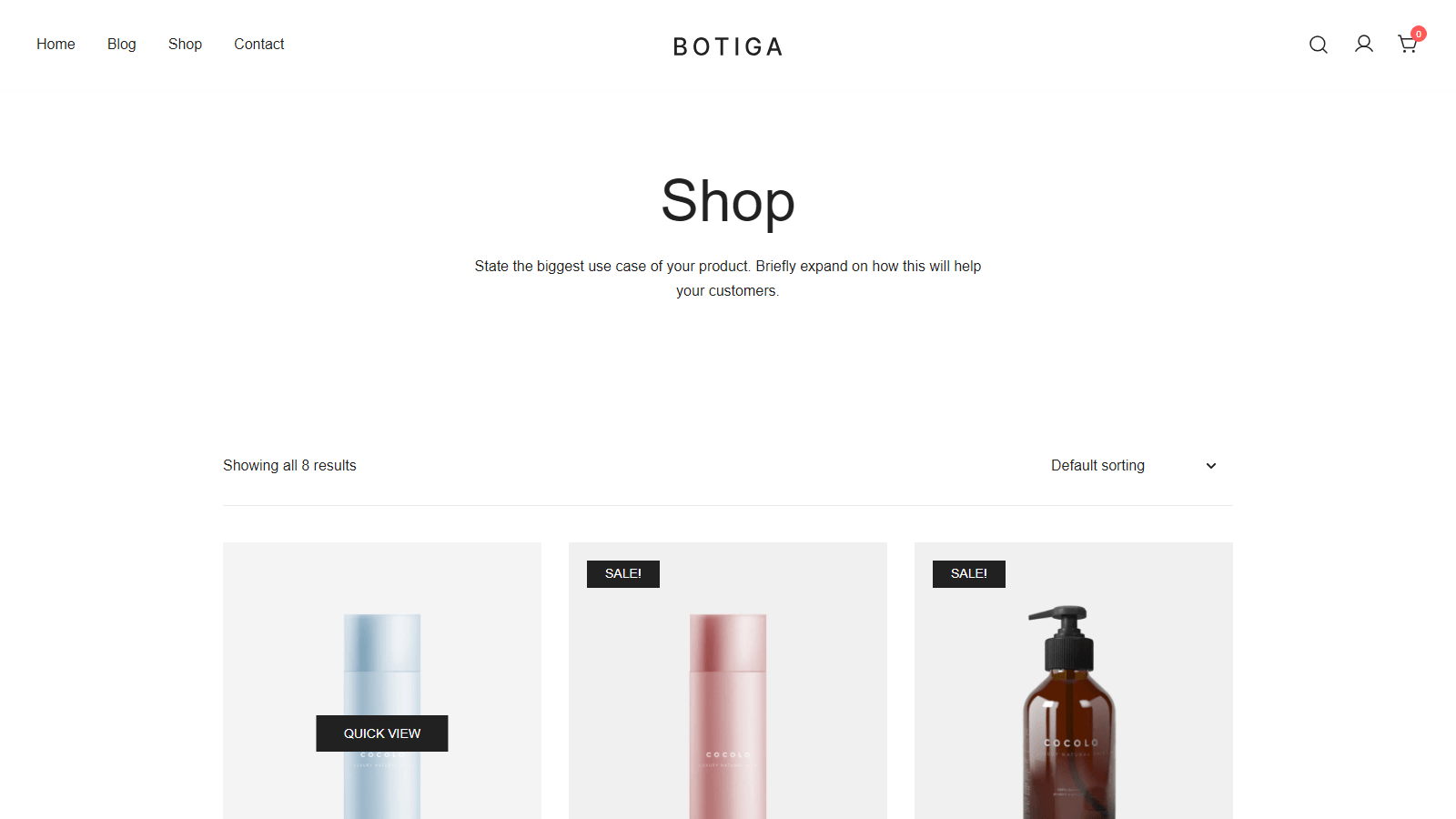
It is built for performance from the ground up. It uses vanilla JavaScript with no jQuery dependency and minifies its own code automatically, which keeps store pages lighter than a multipurpose theme with a WooCommerce skin bolted on.
Key things to know
- Free on WordPress.org, currently version 2.4.7
- 10,000+ active installs, rated 4.9 from 163 reviews
- Vanilla JavaScript, no jQuery dependency
- Multiple cart and checkout layouts, variation swatches, wishlists, sticky add-to-cart
If you are running a store, theme choice is only one lever. We walk through the rest in our guides to the fastest WooCommerce themes and how to speed up a WooCommerce store.
My verdict: Botiga is the pick if you sell things. Its install base is smaller than the general-purpose themes above, which reflects its narrower scope rather than its quality.
8. Blocksy
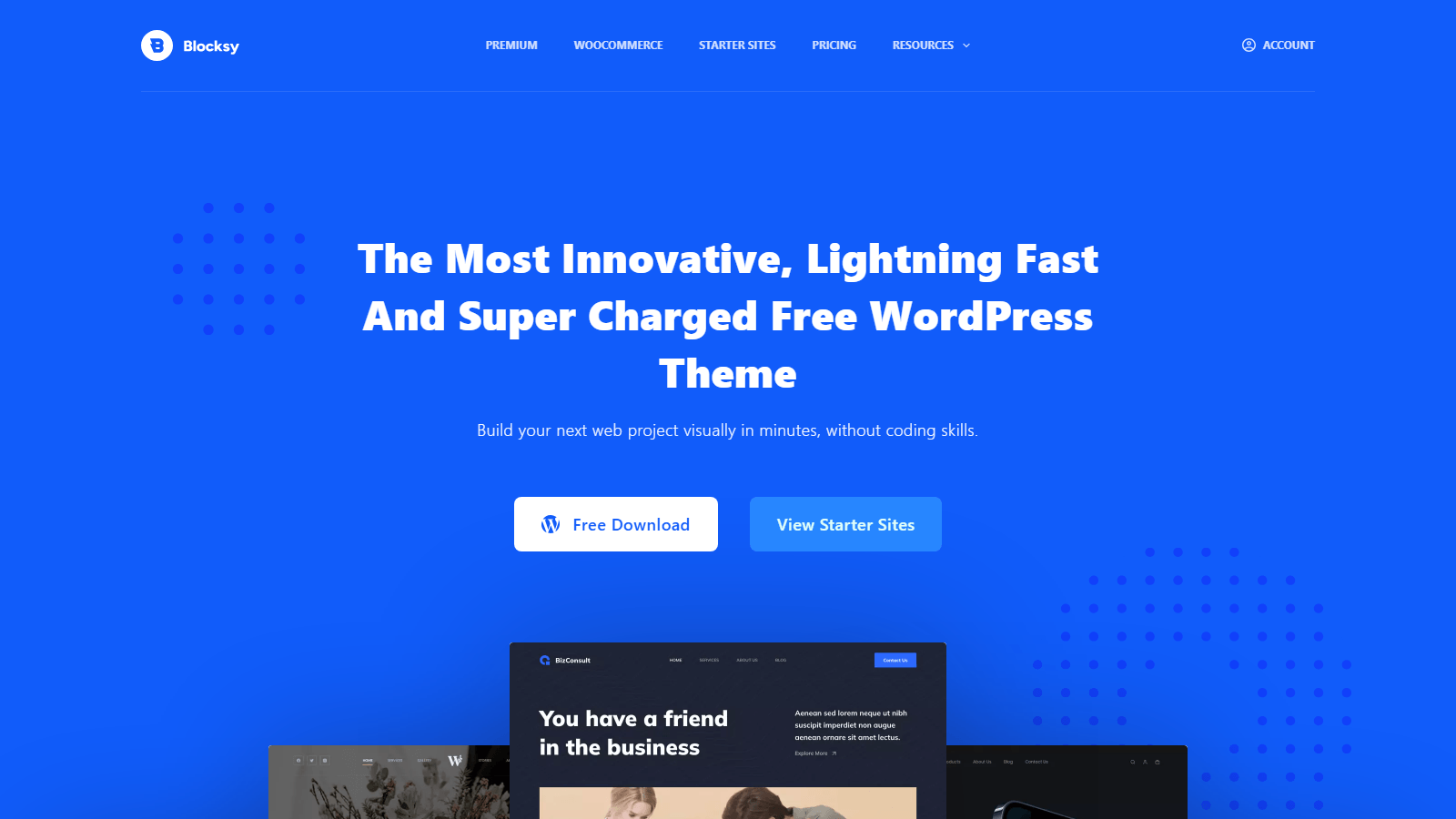
Blocksy is a block theme built with performance controls exposed rather than hidden. It shares GeneratePress's perfect 5.0 rating and is the most recently updated theme on this list.
Key things to know
- Free on WordPress.org, currently version 2.1.53
- 300,000+ active installs, rated 5.0 from 871 reviews
- Built as a block theme with granular performance options
- Updated 13 August 2026, the most recent on this list
My verdict: Blocksy is worth a look if you want block-based building with fine-grained control over what loads. It is a genuinely strong theme that simply has less name recognition than Astra or Kadence.
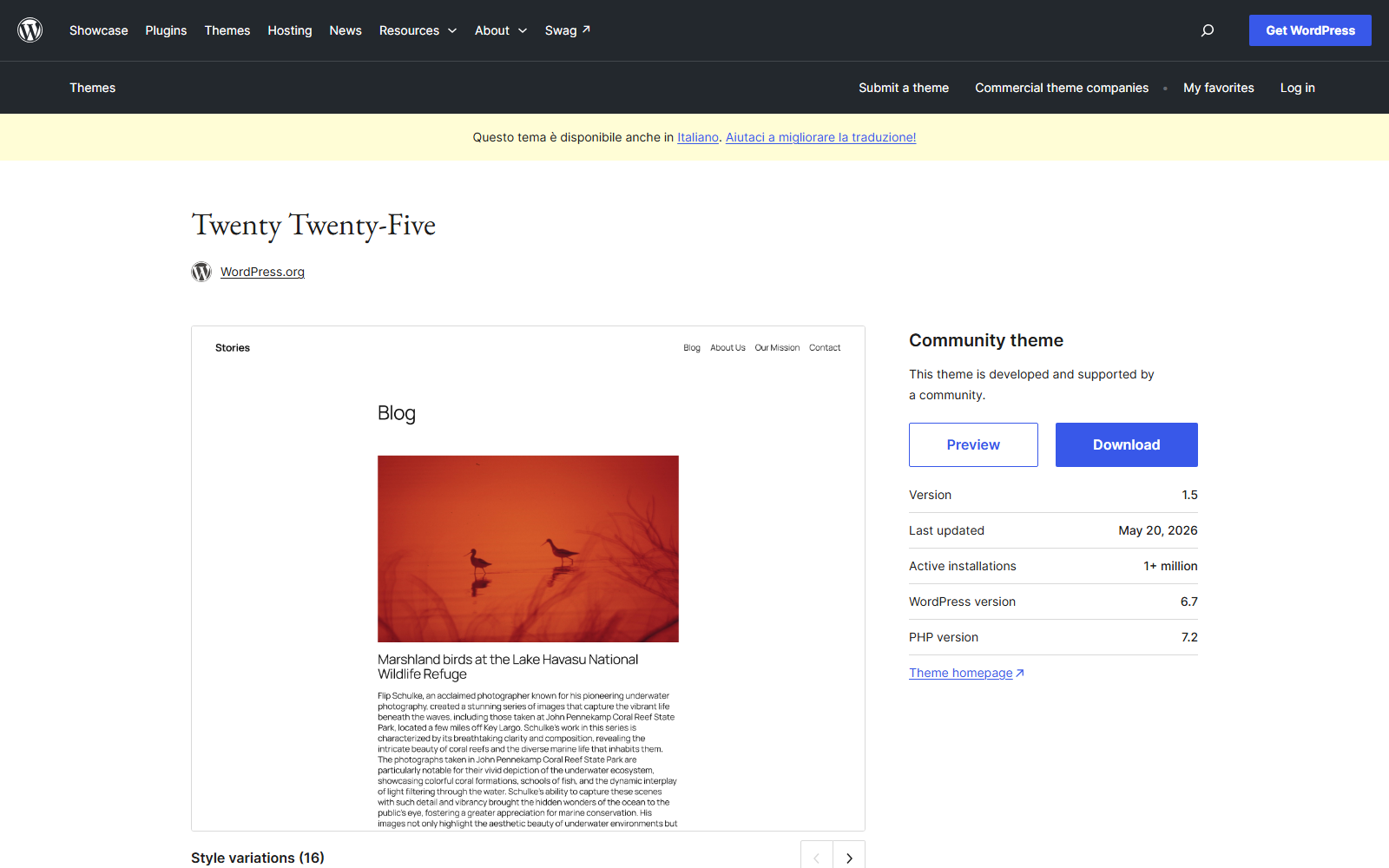
9. Twenty Twenty-Five
The current WordPress default theme almost never appears in these lists, which is a small oversight. It is free, it is fast, it is maintained by WordPress itself, and it is already installed on your site.
Key things to know
- Bundled with WordPress, currently version 1.5
- 1,000,000+ active installs, rated 3.9 from 13 reviews
- Maintained by the WordPress core team
- Zero cost, zero setup, no third-party dependency
The 3.9 rating comes from only 13 reviews, so read it as thin data rather than a verdict. The real limitation is design flexibility, because default themes are built to demonstrate WordPress features rather than to give you a finished-looking business site.
My verdict: Twenty Twenty-Five is a perfectly reasonable baseline if you want zero decisions and zero cost. Most people will outgrow it, but it will not hold your SEO back while you decide.
How to choose the right SEO theme for your site
Skip the feature comparison. Match the theme to what you are building.
| If you are building | Choose | Why |
|---|---|---|
| A blog or content site | Sydney | Fast, flexible, no builder required |
| A site with many landing pages | Astra | Largest starter template library |
| Something you will customize heavily in code | GeneratePress | Cleanest markup, minimal output |
| A site that needs rich results | Kadence | Native schema markup output |
| A mobile-first audience | Neve | Built mobile-first by default |
| A WooCommerce store | Botiga | Built for store page performance |
| An Elementor site | Hello Elementor | The intended neutral base |
| A site built entirely in blocks | Blocksy | Block-native with performance controls |
| A quick start with no budget | Twenty Twenty-Five | Already installed, already fast |
One thing worth repeating. This is a list of SEO-friendly themes, judged on speed, markup and structure. If what you actually need is a theme designed to look like an SEO agency's website, that is a different question with a different answer, and we cover it separately in our roundup of SEO themes built for agencies.
FAQs about SEO WordPress themes
Choosing an SEO friendly WordPress theme raises the same handful of questions every time. Here are direct answers to the ones readers ask most.
Does your WordPress theme affect SEO?
Yes, but indirectly. Your theme does not choose your keywords or write your meta descriptions. It determines how fast your pages load, how clean your HTML is, and whether your heading structure makes sense. Those factors feed into Core Web Vitals and crawlability, both of which affect rankings.
Which WordPress theme is best for SEO?
Sydney is the best all-round choice for most sites because it is fast, free and flexible without requiring a page builder. GeneratePress is better if you want the absolute minimum markup, Kadence is better if you need native schema output, and Botiga is better if you run a WooCommerce store.
Is Astra or GeneratePress better for SEO?
GeneratePress produces slightly leaner markup and holds a perfect 5.0 rating from 1,426 reviews. Astra has a far larger starter template library and a much bigger install base at over a million sites. Choose GeneratePress for minimalism, Astra for speed of building.
Do I still need an SEO plugin if my theme is SEO friendly?
Yes. Your theme handles speed, markup and structure. Meta titles and descriptions, XML sitemaps, canonical URLs, redirects and most structured data are all plugin territory. A fast theme without an SEO plugin is a fast site that Google struggles to index properly.
Are free WordPress themes good for SEO?
They can be excellent. Every theme on this list is free on WordPress.org, including the ones with over a million installs. Price is not the variable that matters. Page weight, code quality and active maintenance are.
Final thoughts on SEO WordPress themes
The decision is simpler than most roundups make it look. Pick a theme that loads fast and outputs clean markup, then spend your remaining effort on content and on a proper SEO plugin. Sydney will serve most sites well, Botiga is the answer for stores, and GeneratePress is there if you want the leanest possible foundation.
What will not work is choosing a heavy multipurpose theme and hoping to optimize your way out of it later. That is a much harder problem to fix than it is to avoid.
Which theme are you leaning towards for your next site, and what is making the decision hard? Let us know in the comments below.

Related Posts


