People search for Shopify competitors from two very different places. Some are picking a first platform and want to know what else exists, and some are already on Shopify, watching the monthly bill and the app fees stack up, wondering what leaving would cost, and this list serves both.
The direct answer runs on one axis, ownership. WooCommerce is the pick when you want to own the stack, your data, and your costs. BigCommerce is the straightest like-for-like swap if you want to stay on a hosted platform. Wix and Squarespace trade control for simplicity, and the remaining three serve narrower situations. Every entry ends with a verdict naming who should pick it.
How we picked these platforms
One frame organizes this comparison better than any feature checklist, and it is whether you rent or own. Shopify, BigCommerce, Wix, Squarespace, Square Online, Ecwid, and Big Cartel are rentals, since the platform hosts your store, sets the rules, and charges while you operate. WooCommerce is ownership, since the software is free and open source, and you take on hosting and maintenance in exchange for control.
We also cut the long tail of niche carts whose development has gone quiet, since a store is a bad place to inherit abandoned software. A pair of sourcing rules applies to every entry that follows. Hard numbers appear only where a public, checkable source exists, which in this list means WordPress.org data for WooCommerce, quoted with its pull date. And prices are described as models rather than dollar figures, because every platform here runs promotions and revises tiers often enough that a quoted number would mislead someone within months, so each vendor's pricing page carries the current state.
aThemes builds WooCommerce products, so this list has a stake in its own #1 pick, and the reasons below are laid out so you can check them.
Shopify alternatives compared
Every platform name jumps to its full entry.
| Platform | Best for | Model | Standout |
|---|---|---|---|
| WooCommerce | Owning your stack | Free open-source plugin, you host | No platform rent, total control |
| BigCommerce | Like-for-like hosted swap | SaaS subscription | Built-in features over apps |
| Wix | Easiest full package | Builder subscription with commerce tiers | All-in-one simplicity |
| Squarespace | Design-led small catalogs | Builder subscription with commerce | Strongest templates |
| Square Online | POS-first sellers | Free tier tied to Square payments | Sell online at no base cost |
| Ecwid | Adding a store to an existing site | Widget layer, freemium | Keep your current website |
| Big Cartel | Artists and tiny catalogs | Minimal subscription, small free tier | Deliberate simplicity |
1. WooCommerce
WooCommerce is the ownership answer, a free open-source plugin that turns WordPress into a store. It runs on more than 7 million active sites by WordPress.org's count, pulled late July 2026, with a 4.5 star average from about 4,800 reviews and a current 10.9 release line. Nobody can raise your platform fee, close your account, or deprecate your theme, because no platform sits between you and your store, only software you run.
The stake gets named again because it belongs inside this entry, since aThemes builds a WooCommerce theme and a WooCommerce plugin, and this article links both. What you get in exchange for hosting responsibility is the part Shopify cannot match. You choose the checkout flow, own the customer data outright, and extend anything, and if you want the polished single-column checkout Shopify users know, you can make your WooCommerce checkout feel like Shopify without paying anyone monthly for it.
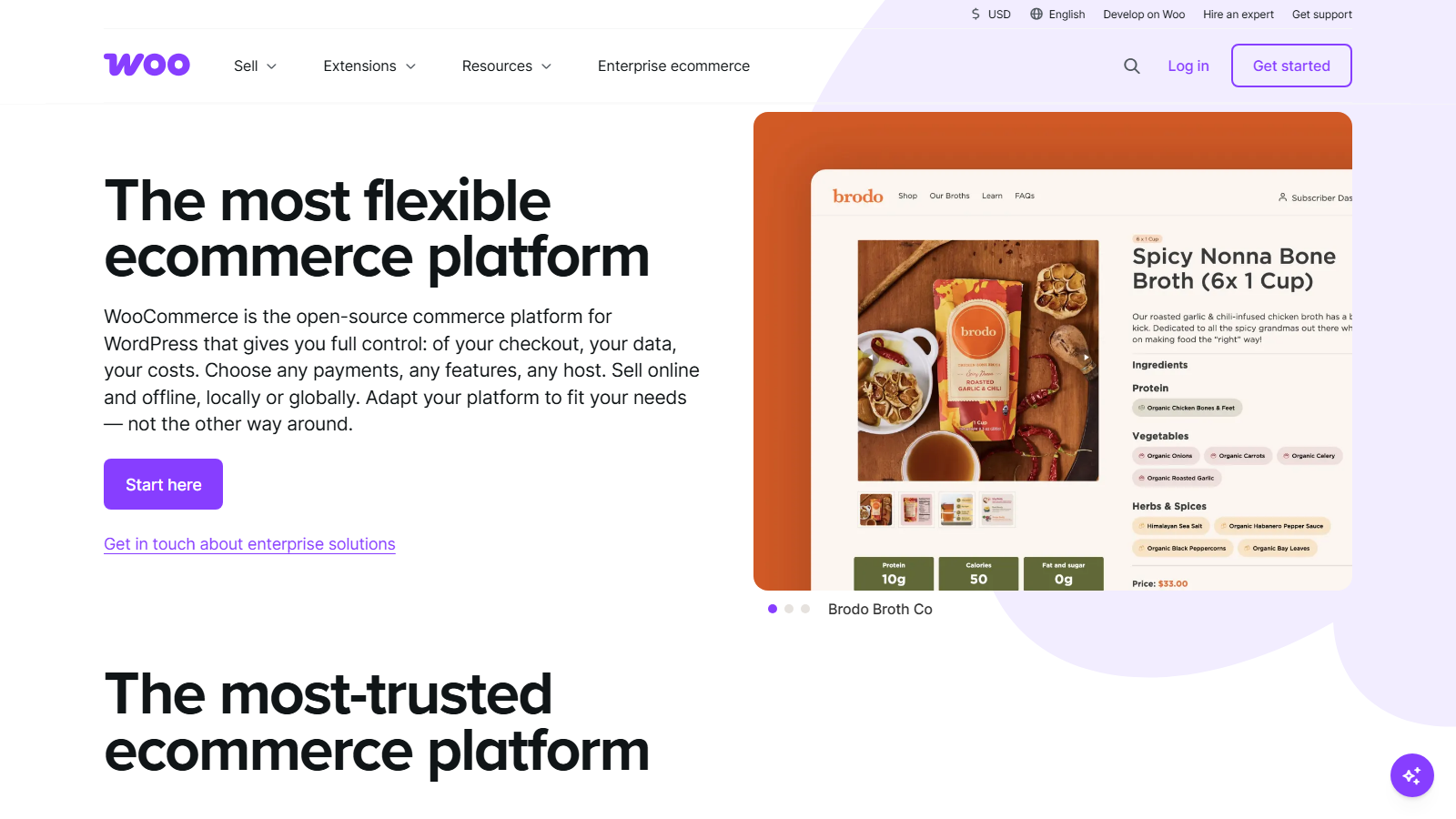
The practical stack comes down to three decisions, and hosting is the first of them, replacing your Shopify subscription as the main running cost. A storefront theme comes second, and Botiga is our conversion-focused pick, with a free version on WordPress.org. Conversion tooling comes third, where Merchant consolidates the sticky carts, trust badges, and upsell modules that often arrive as separate apps on hosted platforms.
- Ownership: the data, the checkout, and the rules stay with you, exportable at every step
- Cost model: free core software, paid hosting you select, optional paid extensions
- Ceiling: high, because the open architecture scales with your hosting rather than with plan tiers
My verdict: WooCommerce is the pick for store owners who want control and are willing to own hosting in exchange. If touching a server even through a managed host sounds wrong, stay hosted and read on.
2. BigCommerce
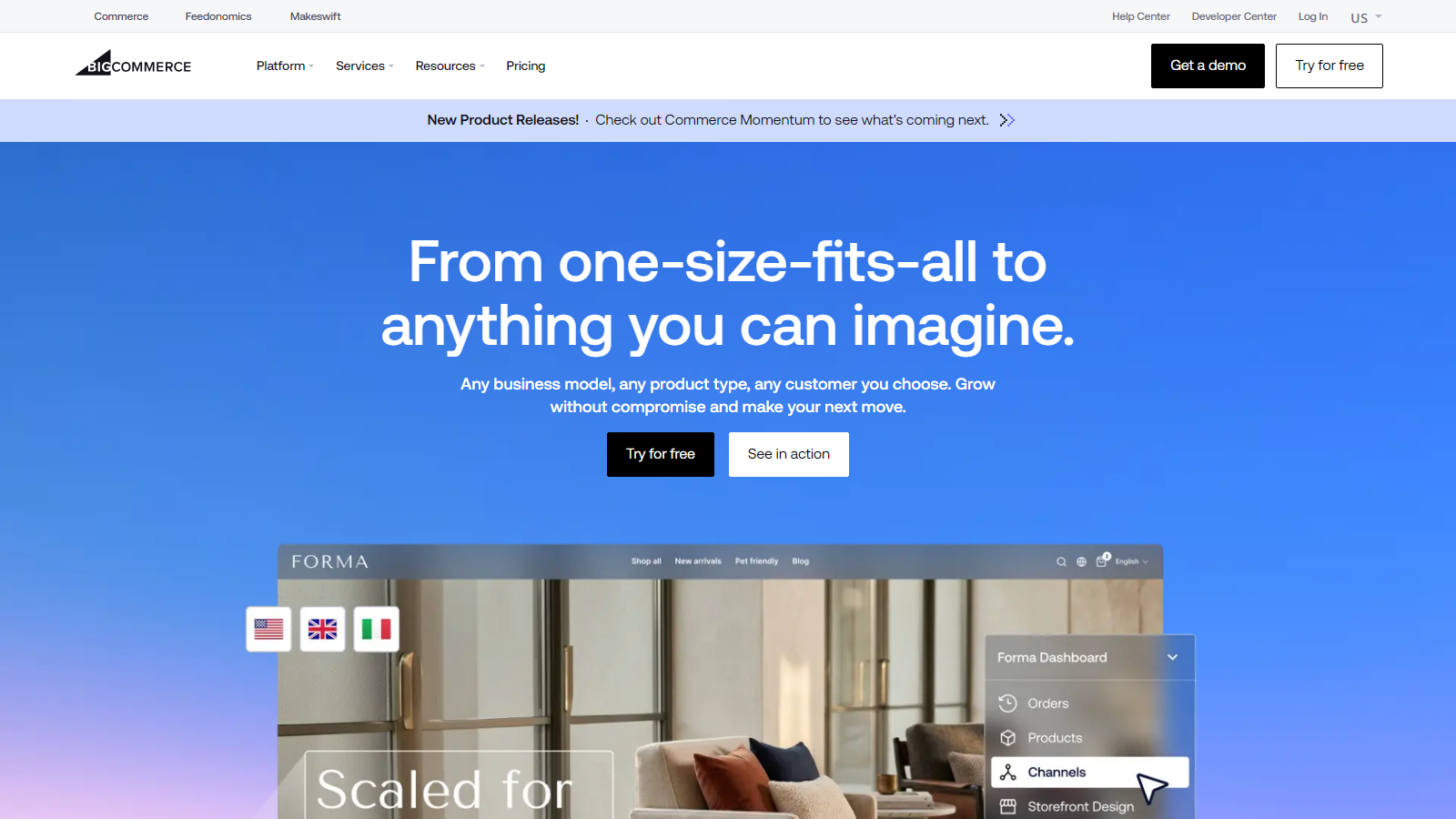
BigCommerce plays the same hosted SaaS game as Shopify with one visible difference in approach, which is building commerce features in rather than selling them through an app store. Its own pitch centers on product options, multi-storefront support, and B2B tooling of the kind Shopify stores often assemble from apps.
For a merchant leaving Shopify but not leaving the hosted model, this is the shortest move, since the operational shape stays identical, a subscription, a dashboard, themes, and support, with the differences showing up in what is bundled versus bolted on.
- Built-in over apps: more commerce features standard, less app-fee sprawl
- Scaling lean: positioned hardest at growing and B2B catalogs
- Same model as Shopify: hosted, subscription-based, platform-managed
My verdict: BigCommerce fits merchants who like the hosted model but resent the app-fee stack. Small simple stores will find its depth more than they need.
3. Wix
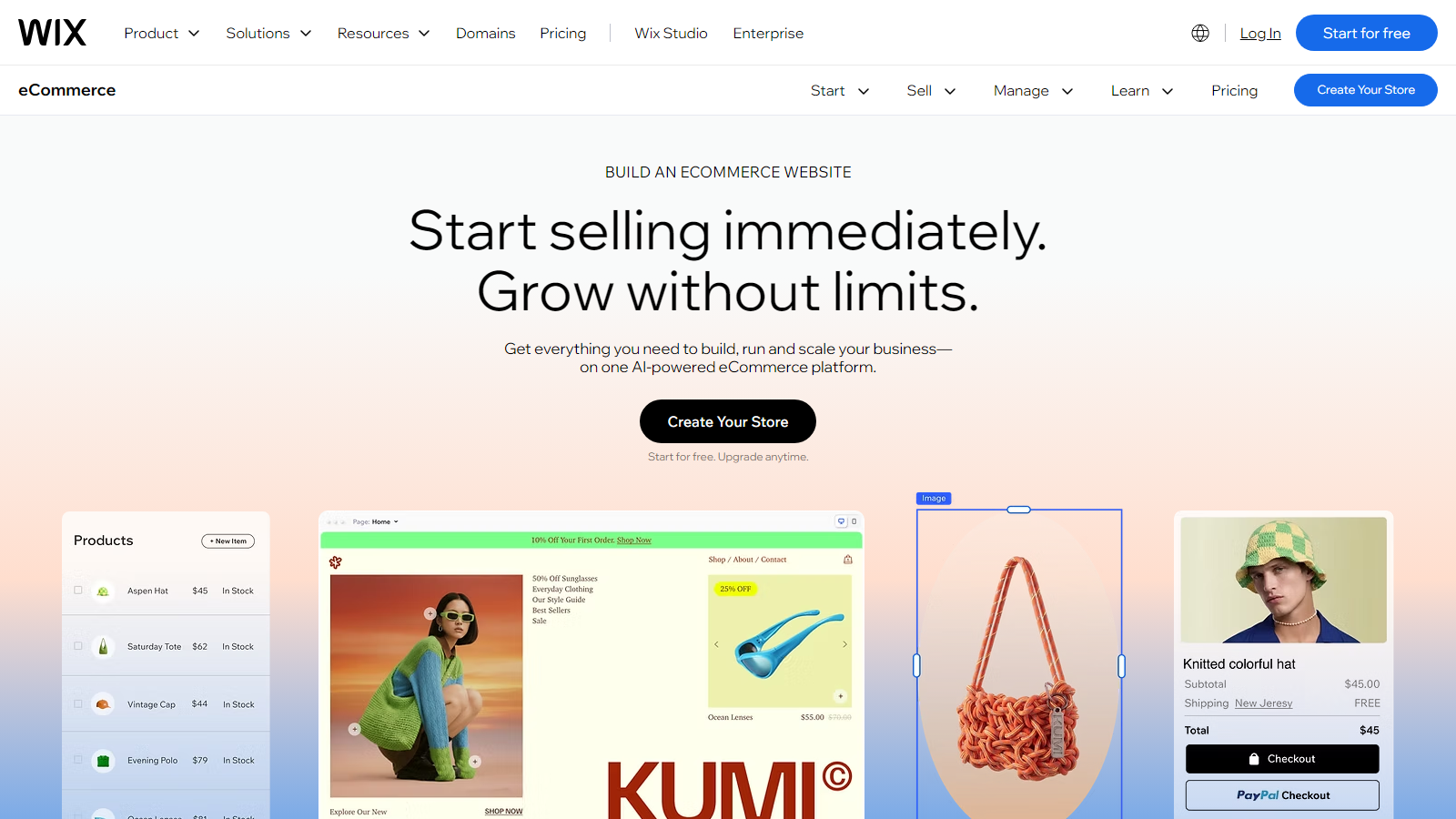
Wix is the easiest complete package in this list, a website builder with commerce tiers where the store, the marketing tools, and the design surface live in one subscription. For a first-time seller with a small catalog, the distance from nothing to a working store is shorter here than anywhere else in this comparison.
The trade-off arrives later, because convenience is what Wix is selling, and stores that outgrow Wix's commerce depth or want fine control over checkout and data face a real migration rather than an upgrade.
- All-in-one: site, store, and marketing under one roof
- Beginner distance: the fastest zero-to-selling path here
- Growth ceiling: deep customization and data control sit outside what Wix offers
My verdict: Wix suits small stores that value ease above everything and do not expect to outgrow it soon. Ambitious catalogs should start where they intend to end up.
4. Squarespace
Squarespace competes on design, with the strongest template baseline of the hosted builders, and its commerce tier serves brand-forward sellers, portfolios that sell, studios, and small catalogs where how the store looks carries the sale.
Its commerce depth sits below BigCommerce and WooCommerce, so catalogs with complex variants, B2B needs, or heavy integrations will feel the walls early.

- Design baseline: the best-looking defaults in the hosted group
- Brand-forward fit: ideal where aesthetics carry the purchase
- Commerce boundary: built for small clean catalogs, and operational complexity belongs elsewhere
My verdict: Squarespace works best when the brand is the product and the catalog stays small. Operationally demanding stores should look at BigCommerce or WooCommerce instead.
5. Square Online
Square Online exists for a specific seller, the one already ringing up sales on Square in a physical shop. The online store syncs inventory and payments with the counter, and its free tier means a card-reader business can start selling online without a new subscription.
As a standalone Shopify rival it is thinner, since the free tier carries Square branding and the design surface is modest, but for POS-first sellers the integration is the whole point.
- POS sync: counter and online inventory in one system
- Free entry: selling online without a base subscription
- Modest surface: design and depth trail the dedicated platforms
My verdict: Square Online is the natural choice for existing Square sellers going online. Everyone else gets more platform from the entries above.
6. Ecwid
Ecwid starts from a different premise, that you already have a website you like. It embeds a store into any existing site, WordPress or otherwise, as a widget layer, so the store travels with you rather than forcing a rebuild.
That framing sets its boundary too, because a widget store inside someone else's page never controls the full experience the way a dedicated platform does.
- Bolt-on model: adds commerce to the site you already run
- Freemium start: small catalogs begin without payment
- Experience ceiling: the host site limits what the store can be
My verdict: Ecwid fits sellers with an established site who want a store without a rebuild. Anyone starting fresh should pick a real platform from the start.
7. Big Cartel
Big Cartel stays deliberately small, built for artists, makers, and tiny catalogs, with a plain dashboard and a free tier for a handful of products. Its simplicity is a feature for the seller who wants a shop the way they want a booth at a fair, present and simple, with little commitment attached.
Everything beyond that scale, from complex shipping to growing catalogs, belongs to the platforms above.

- Maker focus: built for artists and small-batch sellers
- Free entry: a no-cost tier for tiny catalogs
- Hard scope: deliberately not a scaling platform
My verdict: Big Cartel serves artists with small catalogs who want minimal overhead and nothing more. Treat any growth ambition as a sign to start elsewhere.
How to choose a Shopify alternative
The ownership axis does most of the deciding, and the table below finishes it.
| Your situation | Pick | Why |
|---|---|---|
| Want to own data, checkout, and costs | WooCommerce | Open source, no platform rent |
| Leaving Shopify, staying hosted | BigCommerce | Same model, more built in |
| First store, simplicity above all | Wix | Shortest path to selling |
| Brand-led small catalog | Squarespace | Design carries the sale |
| Already selling on Square | Square Online | POS and online in sync |
| Existing site, add a store | Ecwid | No rebuild required |
| Artist with a handful of products | Big Cartel | Deliberately minimal |
Choosing WooCommerce starts a second, smaller decision tree, and the pieces are covered here already. Our walkthrough on how to create an ecommerce website with WordPress covers the build, the best WooCommerce themes roundup covers the storefront, and if you are weighing the design-platform route instead, our Webflow vs Shopify comparison handles that branch. Sellers staying on Shopify can at least upgrade the storefront from our best Shopify themes collection.
FAQs about Shopify competitors
Four questions dominate this decision, and the answers hold across platform versions.
Is WooCommerce really free?
The software is genuinely free and open source, with no license cost and no platform fee. Your real costs are hosting, a domain, and any premium theme or extensions you choose, and our free ecommerce WordPress themes collection shows how far the no-cost route stretches.
What is the easiest Shopify alternative?
Wix, for a complete store with the least learning, and Square Online, if you already use Square for payments. Both trade depth for that ease, which is a fair trade for small catalogs and a poor one for ambitious stores.
Can I move my store off Shopify?
Yes, and product and customer exports make the data portable, with the major platforms here documenting import paths. The heavier switching costs are theme rebuilds, app replacements, and URL redirects, so budget the move as a project rather than an afternoon.
Which Shopify competitor is best for a small business?
WooCommerce if you want ownership and can handle managed hosting, Wix if you want the platform to handle everything. Between those two poles, match the entries above to what your business already uses and where it intends to grow.
Final thoughts on Shopify competitors
Rent or own decides most of this comparison. Renting from a different landlord fixes specific Shopify complaints, and BigCommerce, Wix, and Squarespace each fix different ones, while owning through WooCommerce removes the landlord entirely in exchange for responsibility. Match the trade to your appetite, not to anyone's feature table, including ours.
If WooCommerce is your pick, start with our WooCommerce web design guide and then work through the WooCommerce SEO checklist.
Which platform runs your store today, and what would finally make you switch? Tell us in the comments, especially if you have left Shopify and can report what the move really cost.

Related Posts


